Dr. Aniruddha Malpani • 30 October 2025 • 5 min read
Why Good Grades Don’t Guarantee a Good Job
A frustrated graduate discovers why degrees fall short and how self-directed learning builds employable skills.
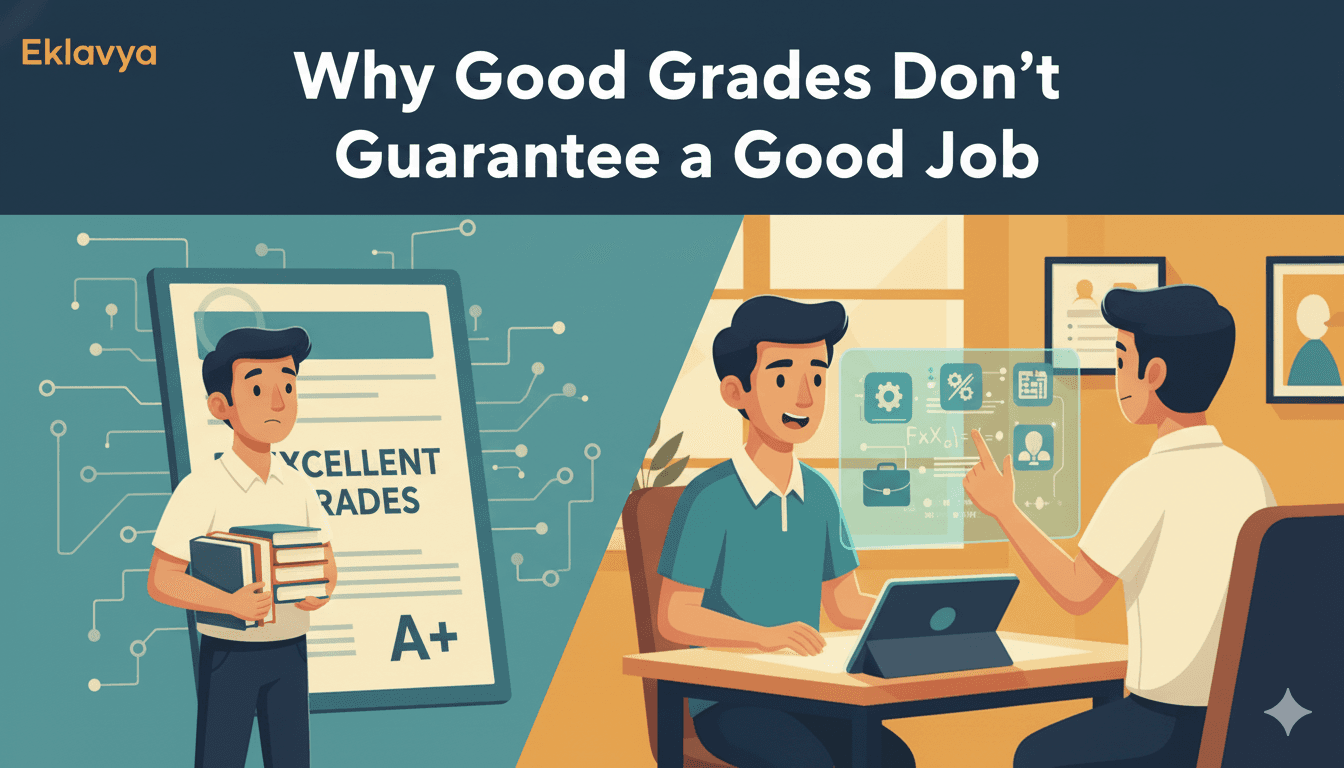
A conversation between a frustrated graduate and Dr. Aniruddha Malpani
Rohan (frustrated graduate): Dr. Malpani, I’m so tired. I graduated from one of the top colleges in my city, scored an 8.9 GPA, and still can’t get a decent job. I’ve been to over a dozen interviews, but I keep getting rejected. HR people say things like “We’ll get back to you” - and they never do. What more can I possibly do?
Dr. Malpani: Rohan, you’ve done what millions of other graduates have done - and that’s exactly the problem. When you do what everyone else is doing, you get the same results they’re getting. The sad truth is, India has become a factory for producing degree-holders, not thinkers.
Rohan: But sir, I studied hard! I attended every lecture, submitted every assignment, and scored well. Isn’t that what education is supposed to be about?
Dr. Malpani: That’s what you were told education is about. But let’s be honest - what did you really learn in those years? Did college ever teach you how to think critically, how to solve real-world problems, or how to work creatively in a team?
You were taught to cram and comply, not to create and question. The system rewards obedience, not originality. You memorized textbooks, reproduced notes, and cleared exams - but you were never encouraged to think for yourself.
Rohan: I guess that’s true. Most of my classes were just lectures. The professors dictated notes; we memorized them for the exam. Nobody cared about applying what we learned.
Dr. Malpani: Exactly. Our education system is a relic of the British era - designed to produce clerks, not creators. It trains students to obey orders, not to solve problems.
That’s why employers today are frustrated. They don’t want walking encyclopedias - they want problem-solvers. They’re looking for people who can adapt, analyze, and innovate. And unfortunately, most graduates have never been given the freedom to develop those skills.
Rohan: But how can students learn to think for themselves if the whole system is built around exams? If I didn’t focus on marks, I’d never have gotten into a good college.
Dr. Malpani: That’s the trap, Rohan. We’ve made marks the currency of success - not mastery. Parents, teachers, and schools have built an ecosystem where marks matter more than learning.
And what happens next? Students chase grades, cram before exams, forget everything a month later, and repeat the cycle. By the end of 15 years of schooling, they’ve become professionally trained crammers - great at following instructions, terrible at thinking independently.
That’s why so many Indian graduates, even from “top” institutions, struggle to find jobs. The market doesn’t reward marks - it rewards value creation.
Rohan: That’s depressing, sir. So you’re saying my degree and GPA don’t mean anything?
Dr. Malpani: They mean you can survive the system - not that you can thrive in the real world. But don’t be disheartened. The good news is, you can still unlearn the bad habits school taught you and start becoming a self-directed learner.
Real learning starts when you stop waiting for someone else to tell you what to do.
Rohan: But where do I even start? I can’t afford expensive online courses, and I don’t have a mentor.
Dr. Malpani: You don’t need either. What you need is curiosity - and the willingness to explore. Today, every resource you could ever need is available online, often for free. The only missing ingredient is your initiative.
That’s why we’ve created app.jee.eklavya.io - a free AI-powered tutor that helps students learn independently. It doesn’t spoon-feed you. It guides you, questions you, and helps you discover how to learn - not just what to memorize.
It’s like having a personal mentor available 24/7 - one who never gets tired, never judges, and never makes you feel small for asking “dumb” questions.
Rohan: But isn’t AI just another teaching tool? How does that help students like me become better thinkers?
Dr. Malpani: Because the AI tutor doesn’t just teach - it makes you think. It adapts to your pace and style. It gives feedback instantly. It forces you to reason through concepts, not just repeat them.
When you start learning this way, you stop being dependent on teachers and textbooks. You start building the one skill every employer values - the ability to teach yourself.
That’s what separates the top 1% from everyone else. The world changes too fast for anyone to rely on what they learned in college. The winners are those who can keep learning, every day, for life.
Rohan: You’re right, sir. No one ever taught us how to learn - just how to pass exams. I wish we’d had something like this in school.
Dr. Malpani: And that’s exactly why I’m trying to reform the system. If we can free students from the prison of rote learning and coaching classes, we can create a generation that thinks instead of just remembers.
Imagine an India where students explore ideas, solve real problems, and build real-world projects instead of cramming for meaningless exams. That’s the kind of mindset that produces entrepreneurs, scientists, and innovators - not job-seekers waiting in HR lines.
Rohan: I get it now. The real problem isn’t that there aren’t enough jobs - it’s that there aren’t enough thinkers.
Dr. Malpani: Exactly, Rohan. You’ve nailed it. India doesn’t suffer from unemployment; it suffers from unlearned potential. And that’s something only students themselves can fix - once they stop being passive consumers of education and become active creators of knowledge.
Final Thought
We don’t need more toppers - we need more thinkers, creators, and problem-solvers. The day we stop measuring intelligence by exam marks is the day India will finally unlock its true talent.
Help us improve India’s first free AI Tutor for JEE students at app.jee.eklavya.io! We want students to become independent, self-directed lifelong learners.
Keep exploring
More from the Eklavya learning desk
Continue the journey with reflections on independent learning, coaching myths, and smarter JEE prep.
What IndianPotholes.com Taught Me About Shipping Early, Caring Deeply, And Living With An Unfinished Project
A personal story about building India's first pothole tracking platform, the fears of launching publicly, fixing production bugs on tea breaks, and why unfinished projects can shape you more than perfect ones.
How I Ended Up Working With Dr Malpani
A long, honest story about fear, luck, talent, chance, growth, and a man who changed my life. From night shift call center employee to Entrepreneur in Residence at Malpani Ventures.